Feedback Loops and Reflection Prompts: Improving Through Small Iterations
What a feedback loop looks like
A feedback loop links a focused test to a short evaluation, then to a next test. The loop is deliberately small: you make one change, observe the result, note the outcome, and plan the next small change. Repeating compact loops leads to steady improvement without overwhelm.
A three-step practice loop
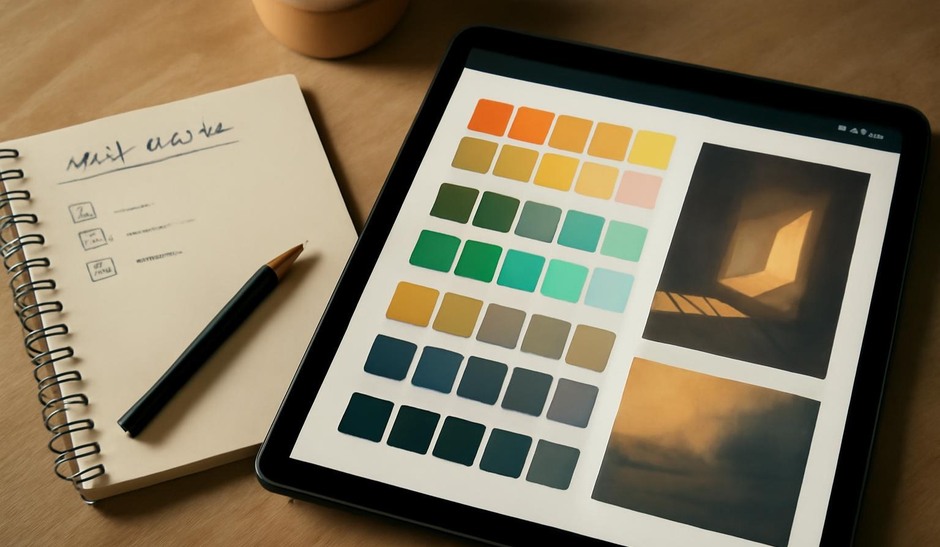
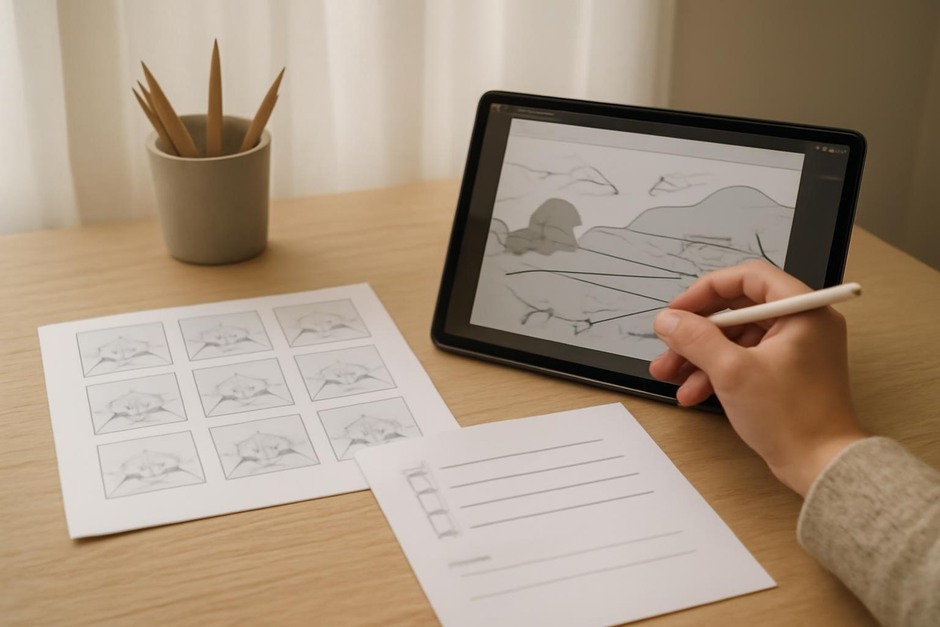
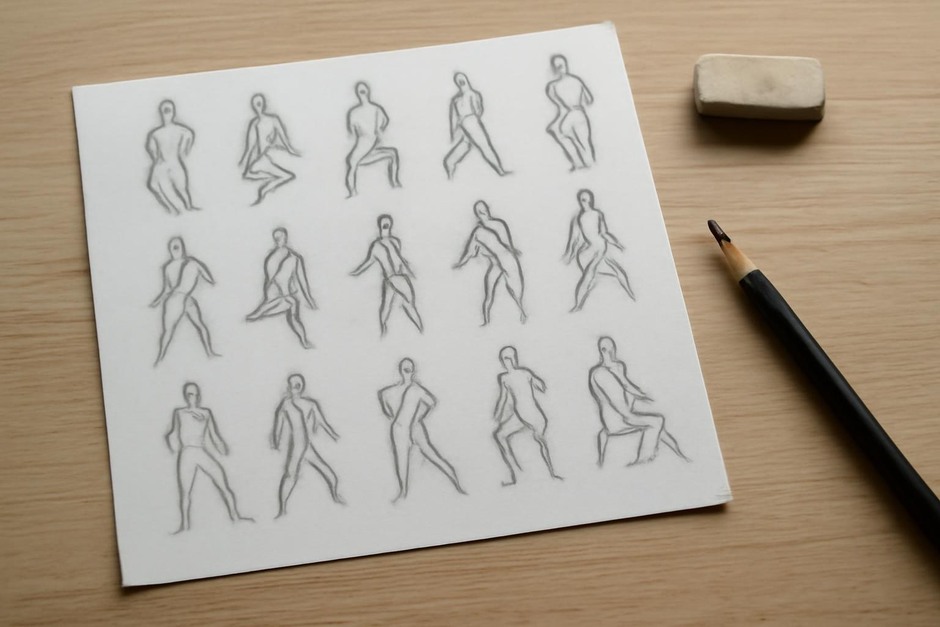
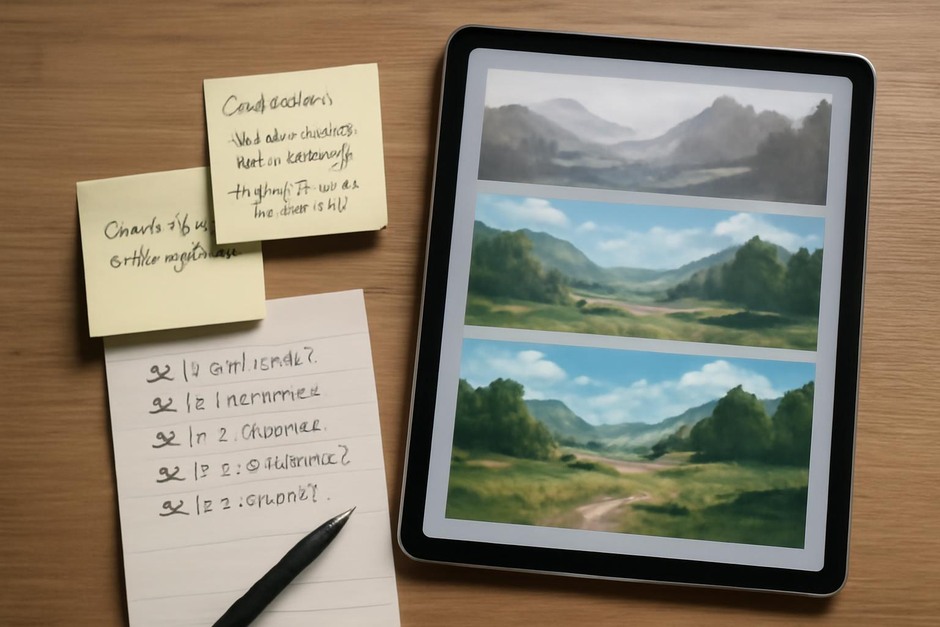
- Test — Run a 30–60 minute focused exercise: a thumbnail study, a colour test, or a pose exploration.
- Evaluate — Spend 5–10 minutes with specific prompts: what worked, what failed, and why.
- Plan — Decide one concrete change for the next test and write it down.
Checklist for a single practice loop
- Define the objective in one sentence.
- Execute the test within the time limit.
- Answer the reflection prompts immediately after the test.
- Record the planned change for the next session.
Reflection prompts to use regularly
- Which decision had the largest visual impact and why?
- What uncertainty remains and how could a small test resolve it?
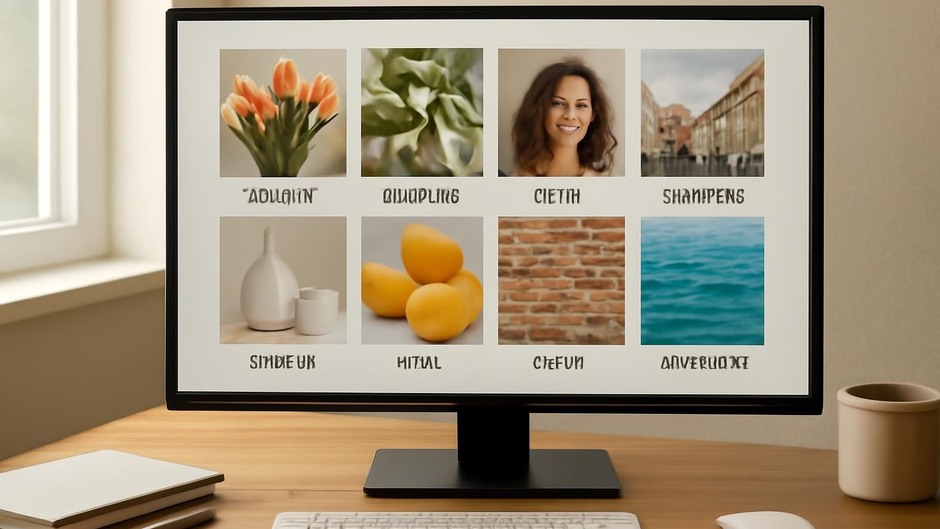
- Did you rely too heavily on a single reference? Could combining sources help?
- What one habit would you emphasise next week to make progress on this issue?
How to get useful feedback from others
If you share work for critique, ask concise, specific questions. For example: “Does the silhouette read clearly from a distance?” or “Is the light direction believable?” Focused questions produce actionable observations that fit into your small-loop practice.
Keep feedback cycles short and structured. Long, diffuse critiques can slow momentum. Use other people’s input to generate your next specific test rather than as a checklist of everything to change.
Small, repeated feedback loops help you learn what decisions consistently lead to better images. Over weeks and months these tiny gains accumulate into clearer judgement and more reliable outcomes in your digital illustration work.