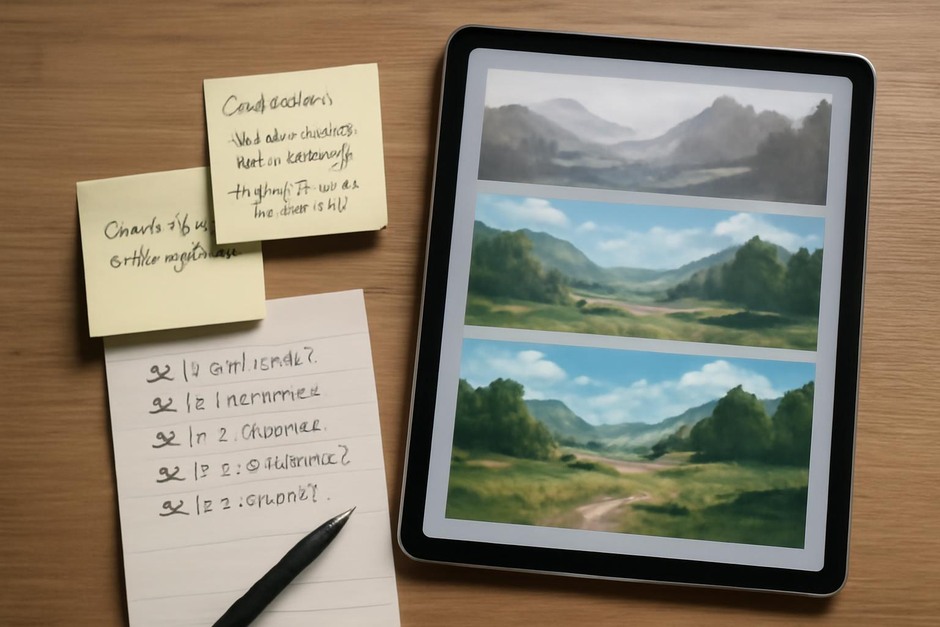
Iterative Studies: Using Thumbnails and Variations to Find Strong Poses
A step-by-step field guide to using iterative thumbnails and small variations to discover better poses and composition without committing too early.
The value of small variations
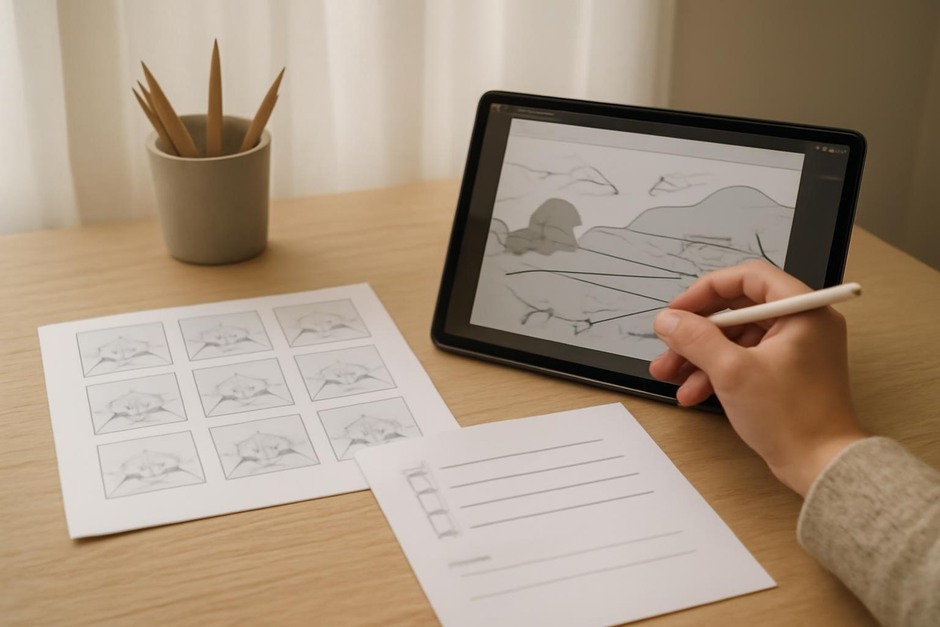
When you explore poses and composition, small, focused changes quickly reveal stronger directions. Iterative studies are short, repeated tests where you alter one variable at a time—tilt of the head, leg position, weight shift, or camera angle—so you can identify what improves the read of the pose.
A simple iterative routine
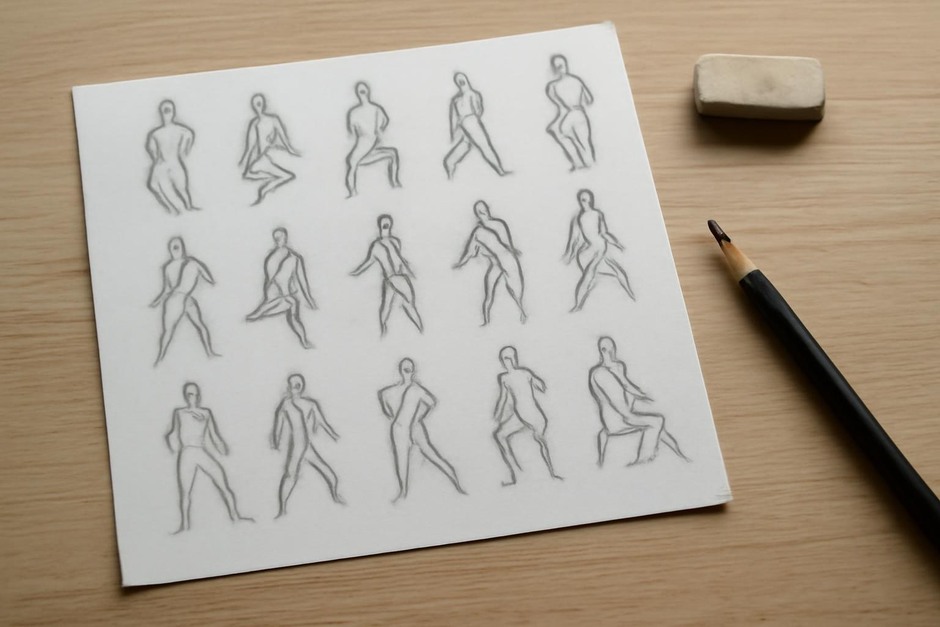
- Start with a single silhouette — Choose a rough posture that suggests a clear action.
- Create five variations — Change exactly one thing per variation: arm angle, hip tilt, head rotation, etc.
- Evaluate quickly — Mark which variations improve the silhouette or read of balance.
- Combine winning elements — Make a second round combining two or three successful changes.
- Scale up — Move the combined result into a larger rough to test proportions and foreshortening.
Checklist for a focused 30-minute study
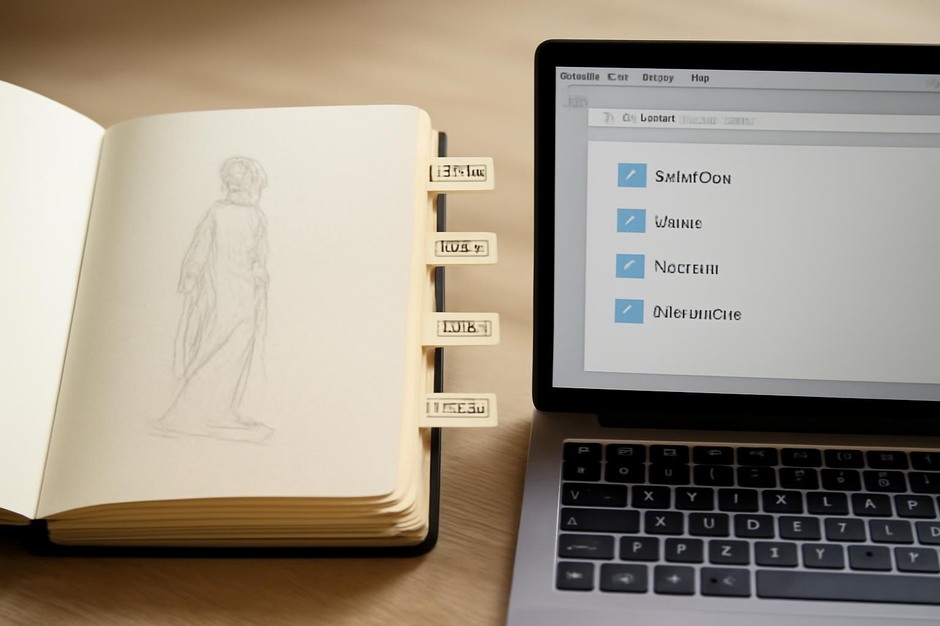
- Minutes 0–5: Draw an initial silhouette (very small, 2–3 cm tall if using paper or small brush size digitally).
- Minutes 5–15: Produce five single-variable variations quickly.
- Minutes 15–20: Choose two winners and sketch combined versions.
- Minutes 20–30: Scale up the most convincing option and evaluate balance and line of action.
Common variables to test
- Line of action angle: increases dynamism or calm
- Weight distribution: which leg supports the body?
- Arm placement: open shapes vs closed shapes
- Silhouette clarity: avoid overlapping limbs that confuse the outline
- Camera angle: low, eye-level, high
Reflection prompts
- Which single change had the biggest positive effect on the silhouette?
- Which variation weakened the read and why?
- Did scaling up reveal new problems not visible in the thumbnail?
Iterative thumbnail studies are low-cost experiments. Doing many small experiments teaches you which decisions consistently improve posing and composition. Over time you start to recognise promising choices earlier, saving time during longer illustrations.